Latest analysis
Inside the Control Room: Operator Decisions Before and During the Collapse
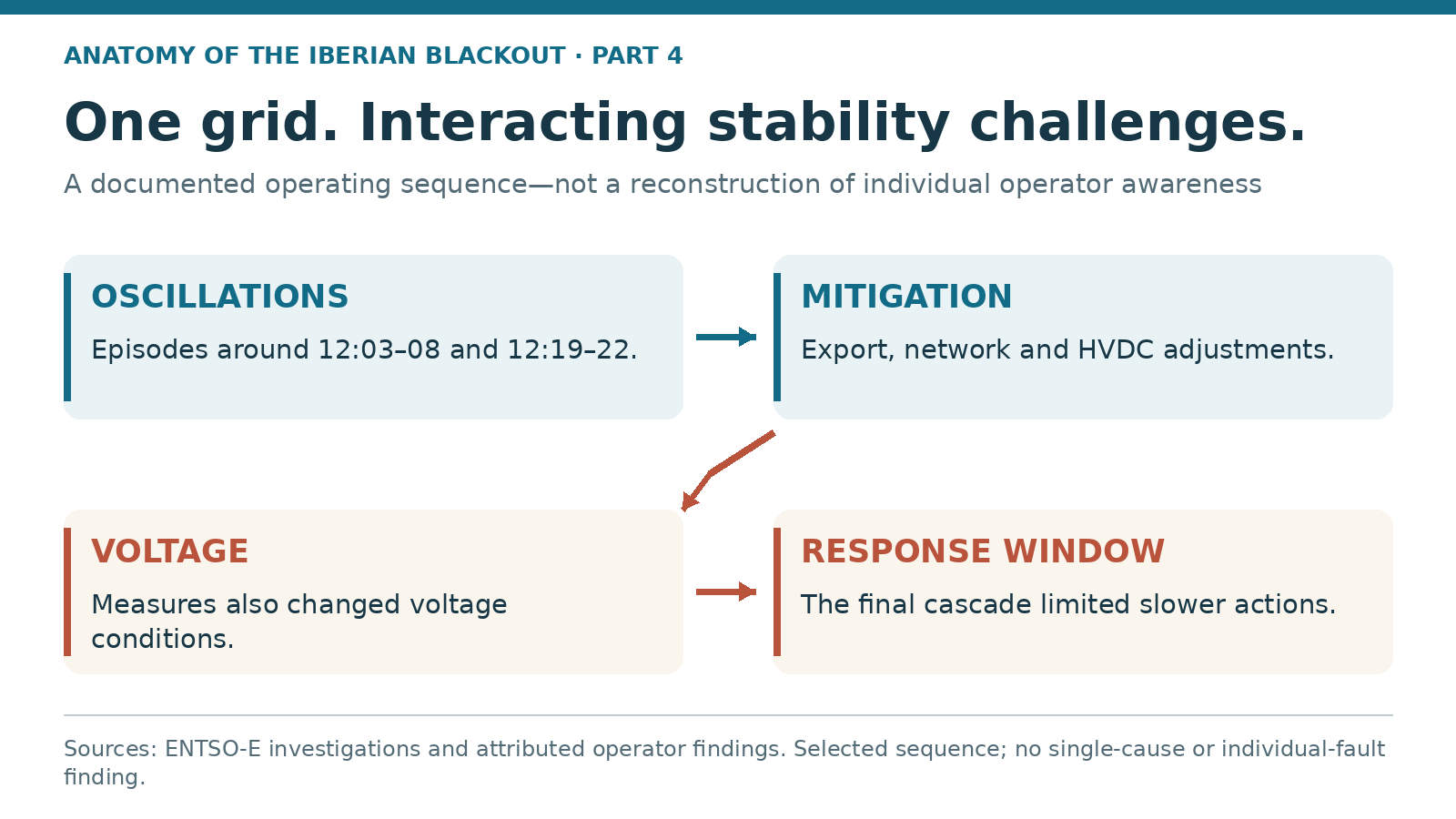
Before the April 2025 Iberian blackout, transmission-system operators were managing oscillations, cross-border power transfers and changing voltage conditions. This investigation examines their documented actions, the operational constraints they faced and the difficult interaction between oscillation damping and voltage control.
The Final 90 Seconds: How the Iberian Grid Collapsed
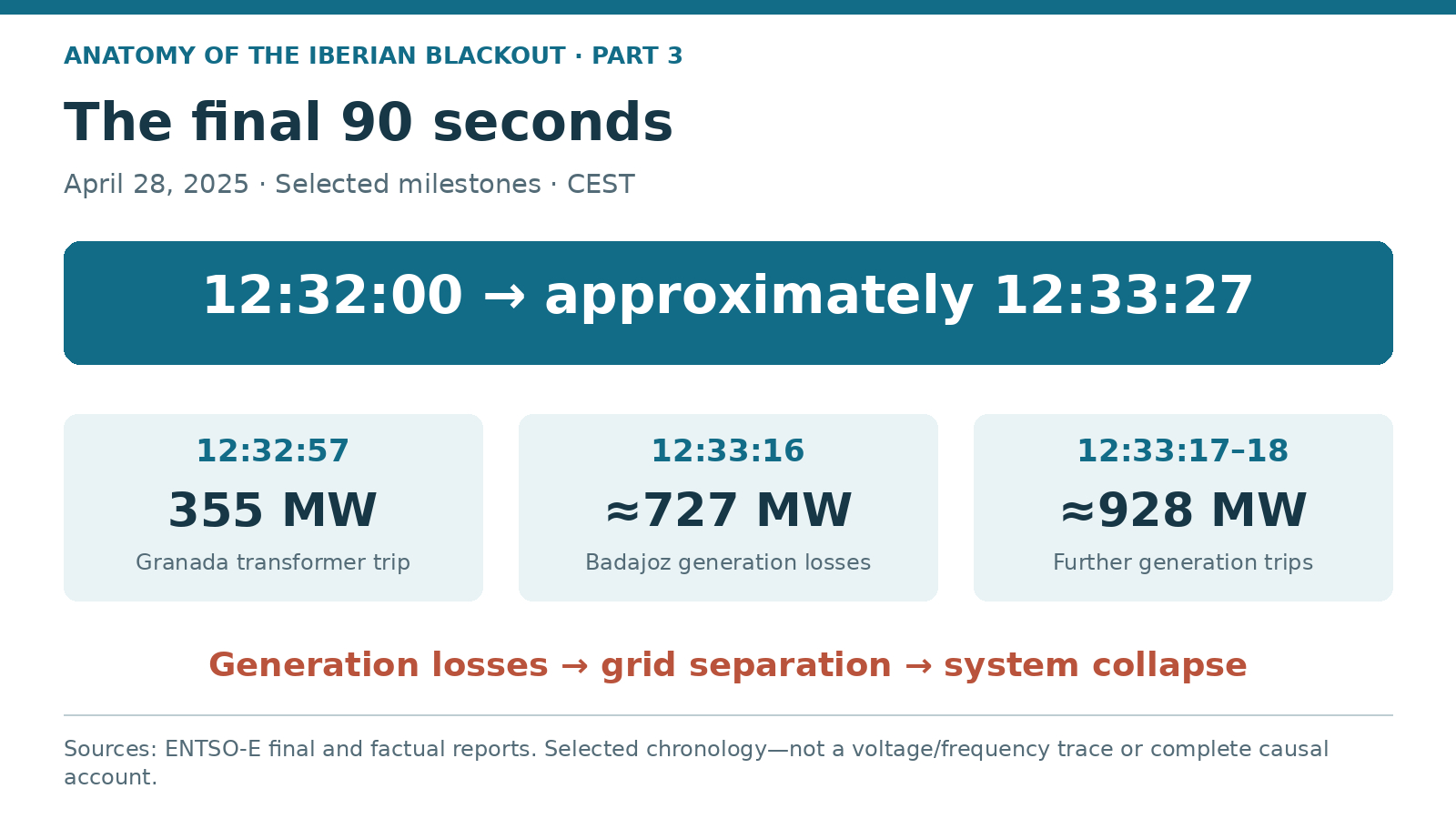
The Iberian blackout unfolded in less than 90 seconds. ENTSO-E’s investigation documents a cascade of generation disconnections, rising transmission voltages, falling frequency and the eventual separation of Spain and Portugal from Continental Europe. This engineering reconstruction examines the sequence that brought down the grid.
The Grid Before the Blackout: Generation, Topology and Voltage Control
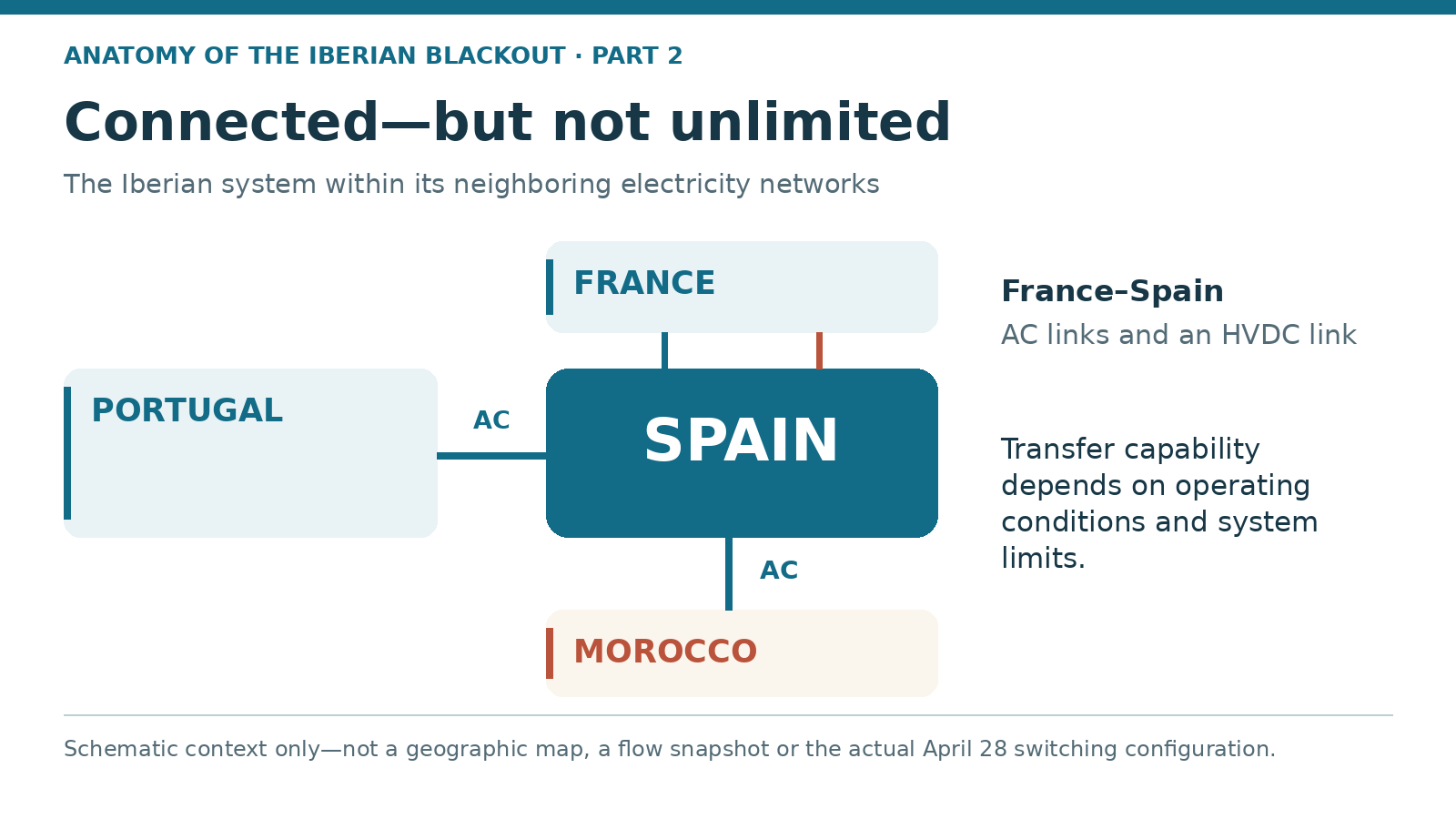
Before the Iberian blackout of April 28, 2025, Spain’s transmission system was exporting electricity to neighboring networks while operators managed oscillations and changing voltage conditions. This engineering investigation examines the network configuration, generation resources, reactive-power capabilities and operating decisions that shaped the system’s vulnerability.
Spain’s 2025 Blackout: How a Voltage Crisis Brought Down the Iberian Grid
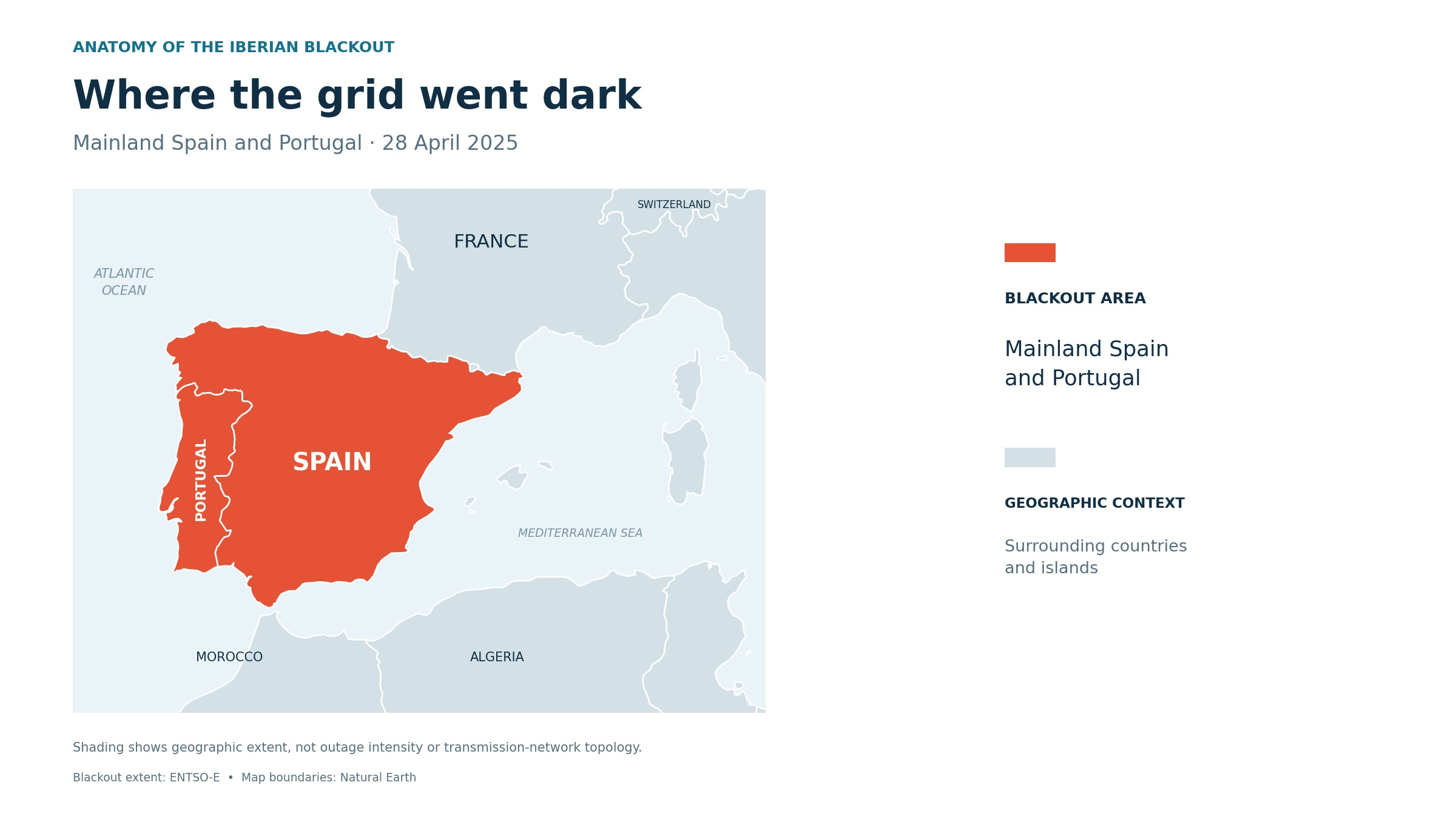
On April 28, 2025, the electricity systems of mainland Spain and Portugal collapsed in a rapid cascade. Drawing on the ENTSO-E investigation, this engineering analysis examines the voltage-control failures, oscillations, generation disconnections and operational challenges behind one of Europe’s most consequential blackouts.
The Future Grid: A New Operating System for Electricity
Power electronics, advanced controls, digital networks and AI-assisted operations are creating a new operating model for electricity. The series finale explores what comes next.
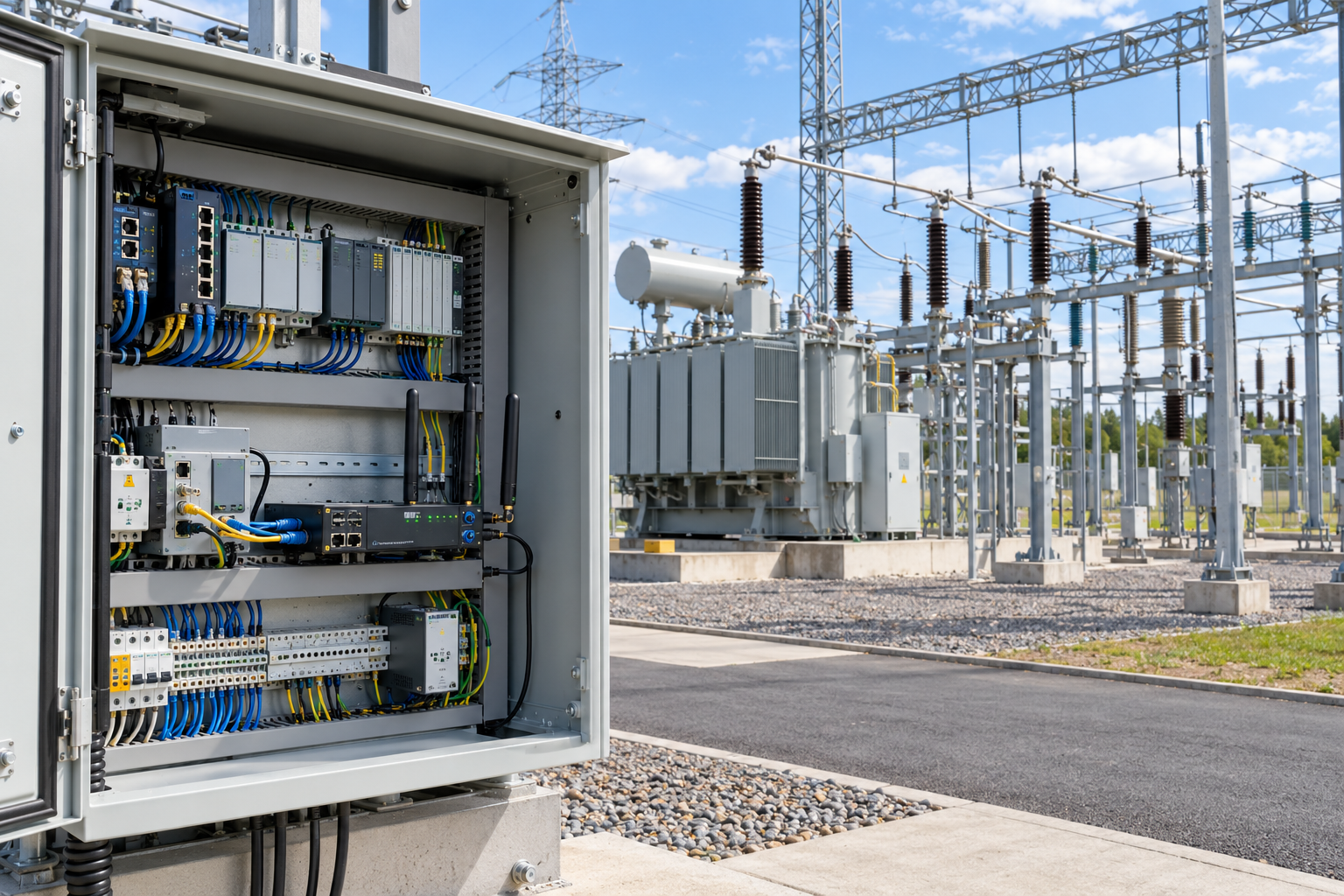
How Hackers Crossed a Private Network to Disrupt a Polish Power Plant
A Polish cyberattack investigation reveals how attackers crossed a private cellular network to reach a power plant’s industrial controls. The incident raises serious questions about cybersecurity and the resilience of increasingly connected electricity infrastructure.
Nigeria’s Grid Generation Fell Nearly 88%. What Really Happened?
Nigeria’s electricity generation fell nearly 88% between reported readings on October 19 as multiple 330-kV transmission lines tripped. The system operator says the disturbance was partial. What do the engineering facts reveal—and what remains unknown?
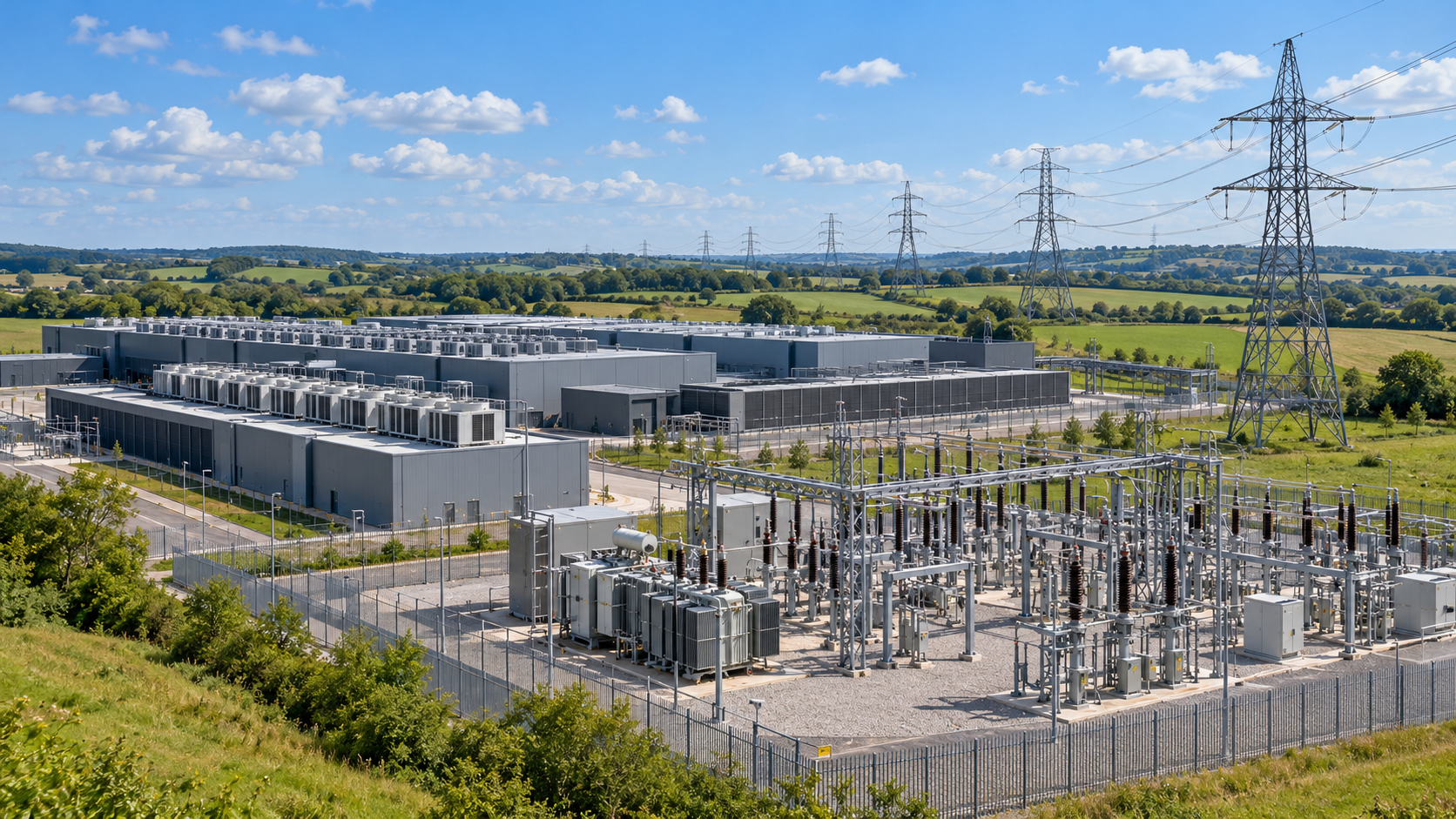
When the Grid Cannot Deliver: How Electricity Delays Are Reshaping AI Data-Center Expansion
Microsoft’s withdrawal from a planned Nscale facility in Britain exposes a growing infrastructure problem: AI projects can be ready to move forward long before the electricity network is ready to serve them.
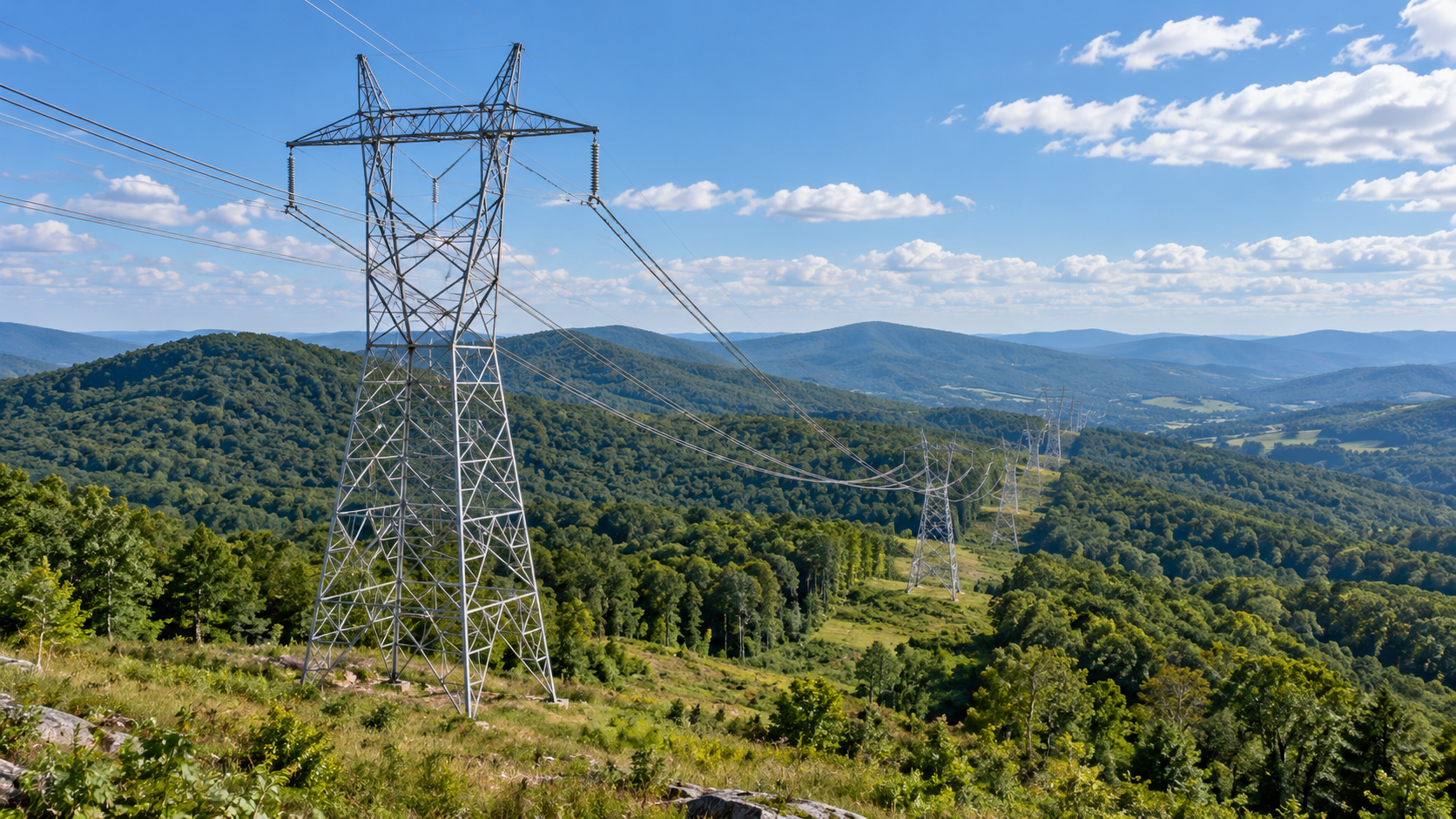
The Grid Cannot Wait for New Transmission Lines. Can Advanced Technologies Unlock Existing Capacity?
DOE’s Virginia and West Virginia initiative highlights a faster approach to transmission expansion—and the engineering limits that still matter.
The Invisible Battle Inside the Grid
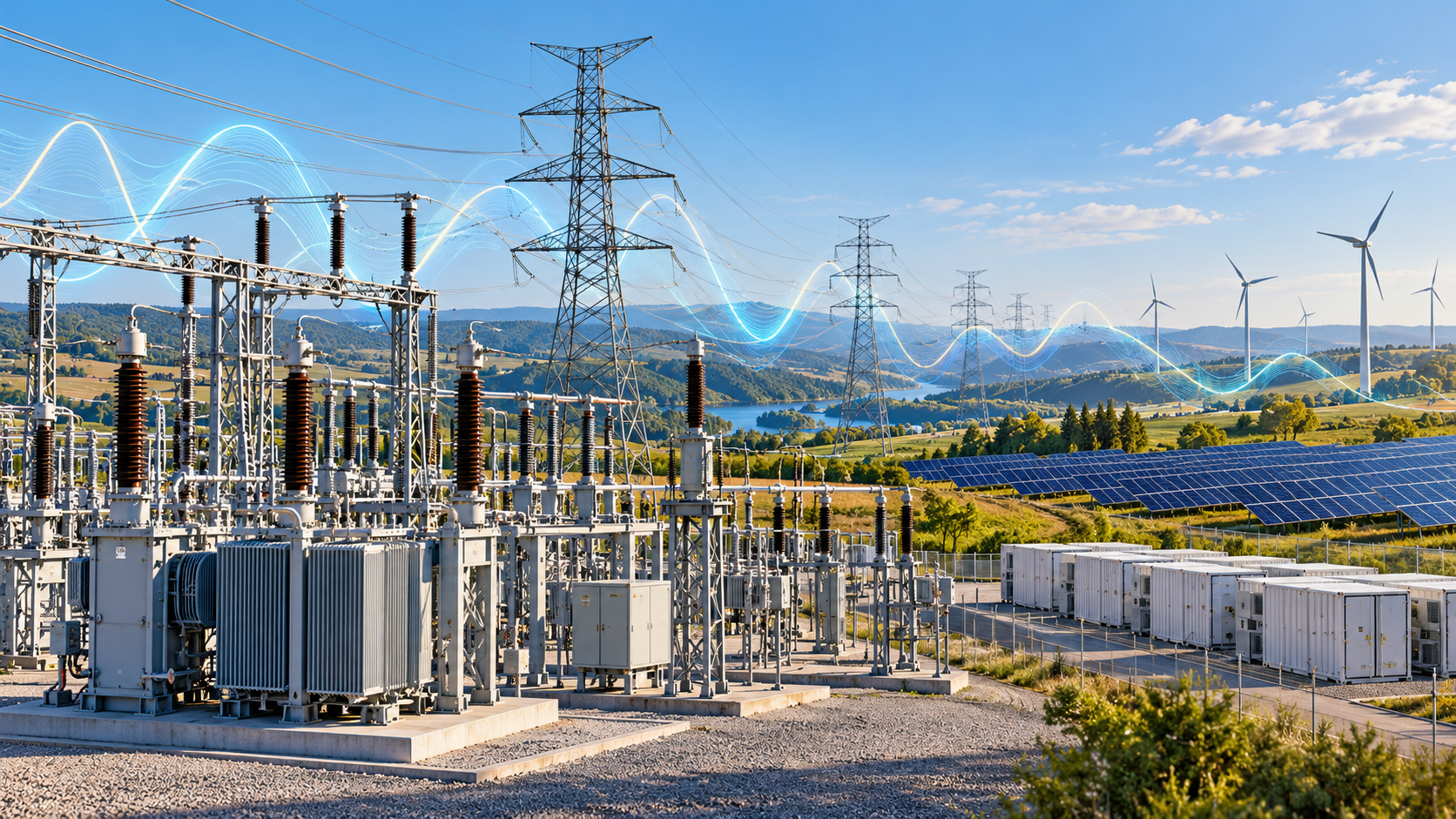
The Return of Oscillations — Why the Renewable Grid Has a New Stability Problem
How inverter-based resources change oscillation mechanisms, control interactions, and the engineering methods needed to maintain adequate damping and grid stability.
From Rotating Machines to Digital Controllers: Why Inverters Are Changing Grid Stability
How synchronous machines, grid-following and grid-forming inverters, weak-grid interactions, and battery controls are changing the engineering of power-system stability.
The New Oscillation Modes Nobody Designed For
How converter controls, subsynchronous interactions, phase-locked loops, and shared networks create oscillation risks—and why accurate models, measurements, and coordinated engineering matter.
Parts 1–3 published · Part 4 forthcoming
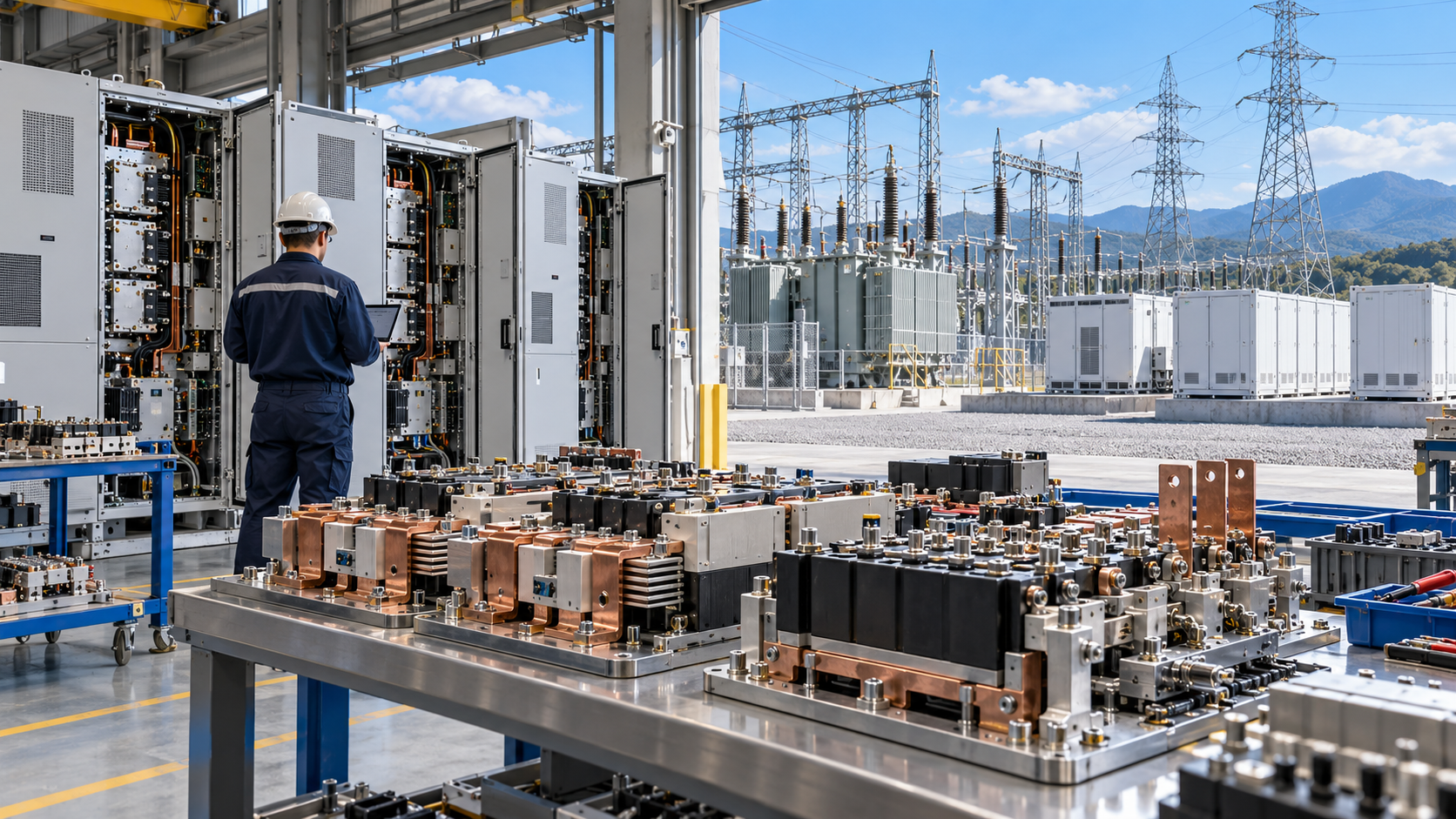
Who Wins? Companies and Technologies Positioned for the Power Electronics Supercycle
Maps the companies, equipment, semiconductor technologies, and engineering capabilities positioned to build the increasingly power-electronic electric grid.
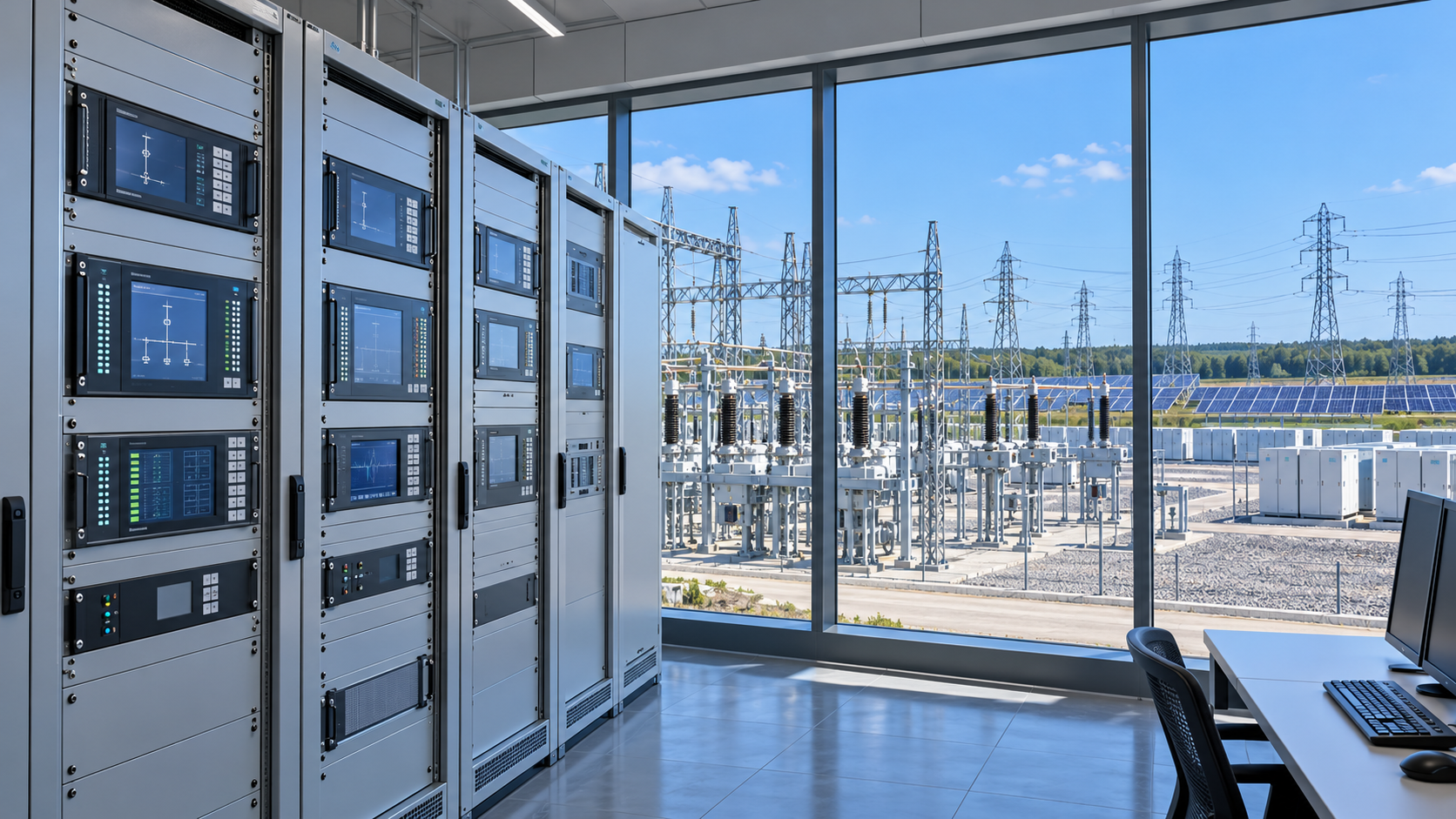
Protection Challenges in Inverter-Dominated Power Systems
Explores how declining fault current and changing system behavior from inverter-based resources are challenging protection schemes designed around synchronous machines.
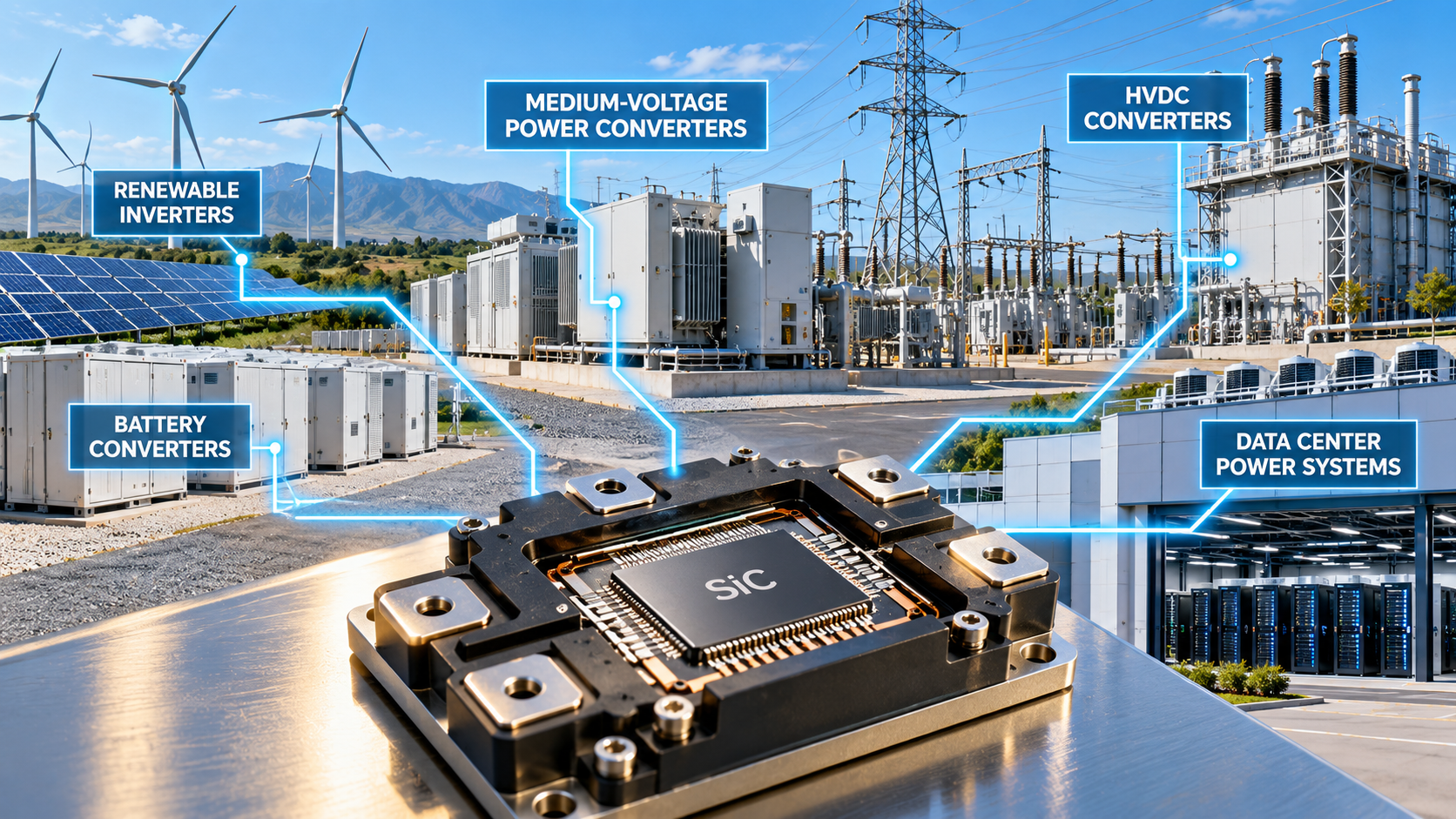
Silicon Carbide: The Semiconductor Revolution Powering the Future Grid
Examines how silicon carbide power semiconductors could enable smaller, faster, and more efficient power-electronic systems across grid infrastructure and energy technologies.
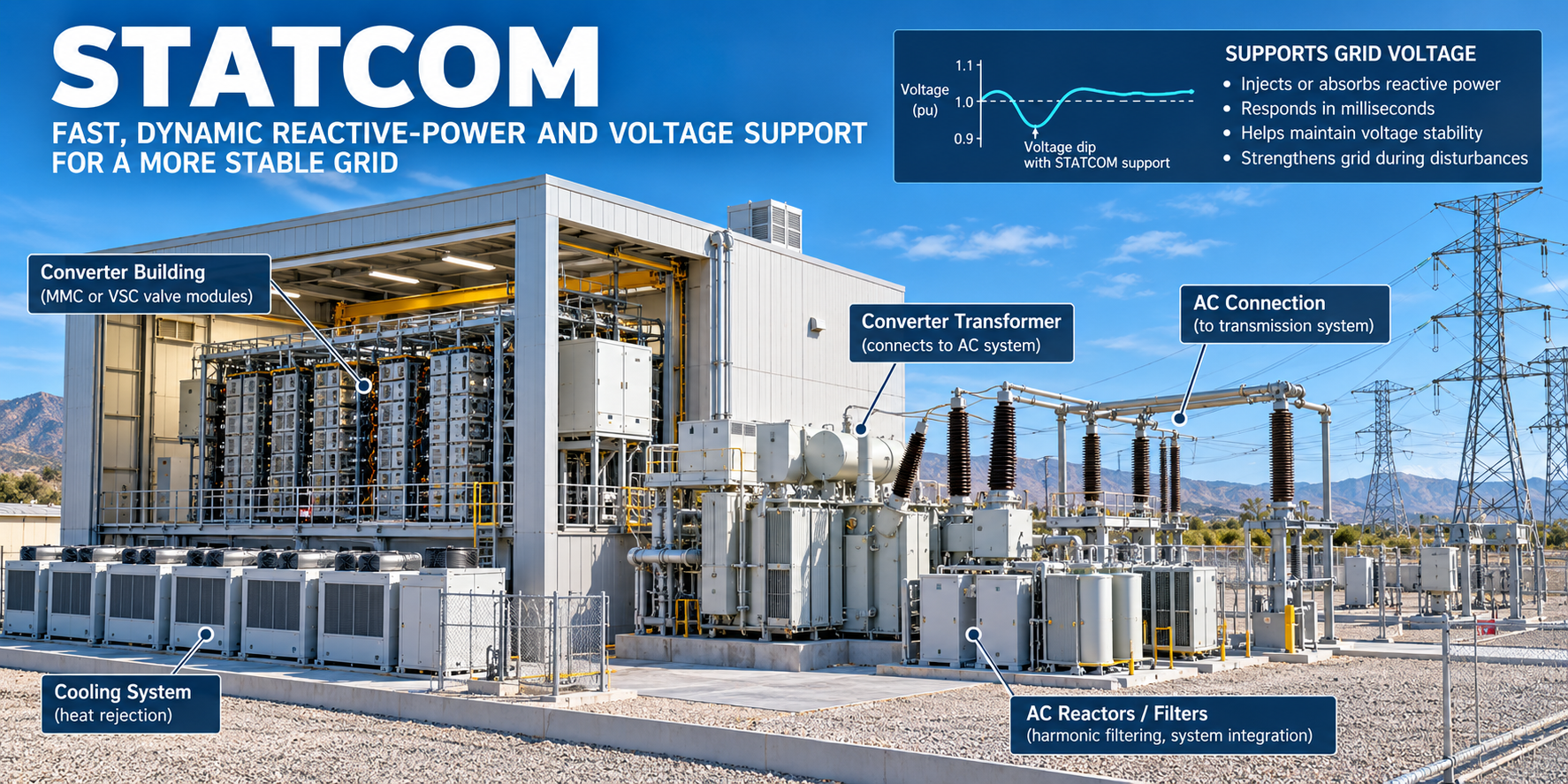
STATCOMs, SVCs, and the New Age of Voltage Control
Explores why STATCOMs, SVCs, and other dynamic reactive-power technologies are becoming increasingly important for voltage control and system strength as the generation mix changes.
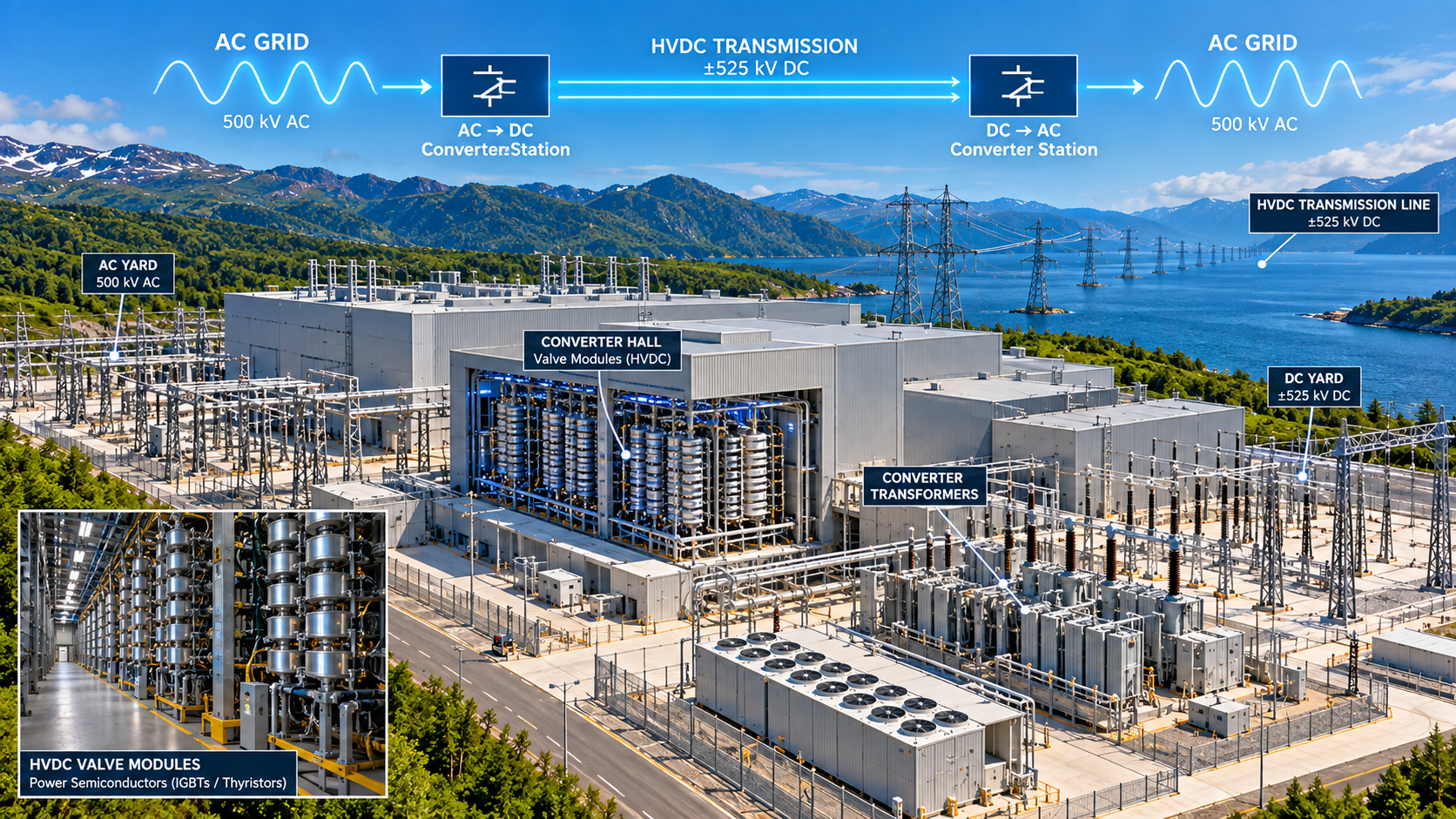
Inside the Global HVDC Expansion Boom
Examines the expanding role of HVDC transmission as grids move larger quantities of electricity across long distances and connect increasingly diverse generation resources and power systems.
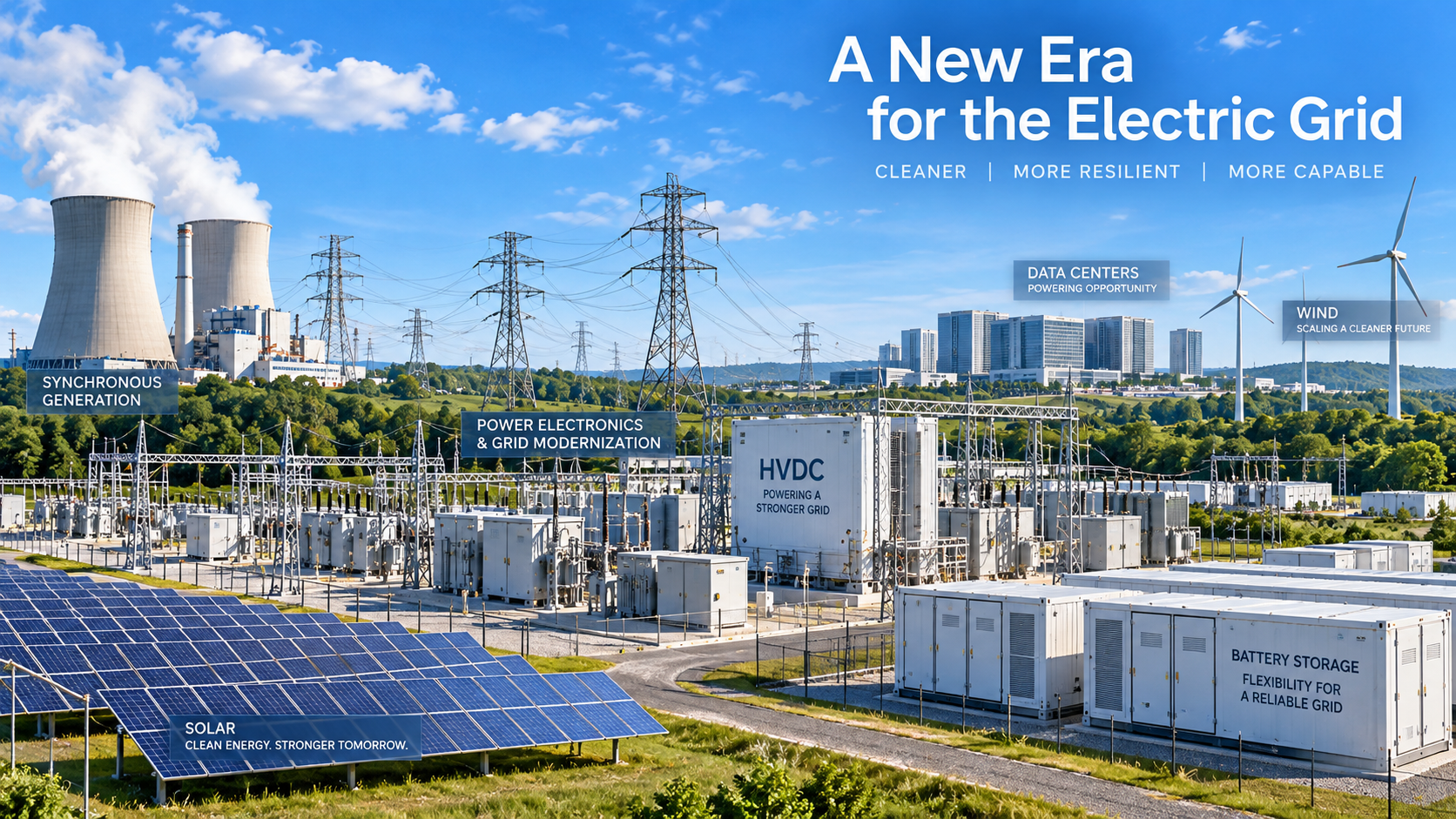
The Biggest Transformation of the Electric Grid Since AC Power
An introduction to the accelerating shift from electromechanical grid infrastructure toward inverter-based resources, HVDC, dynamic reactive support, and increasingly software-controlled power systems.
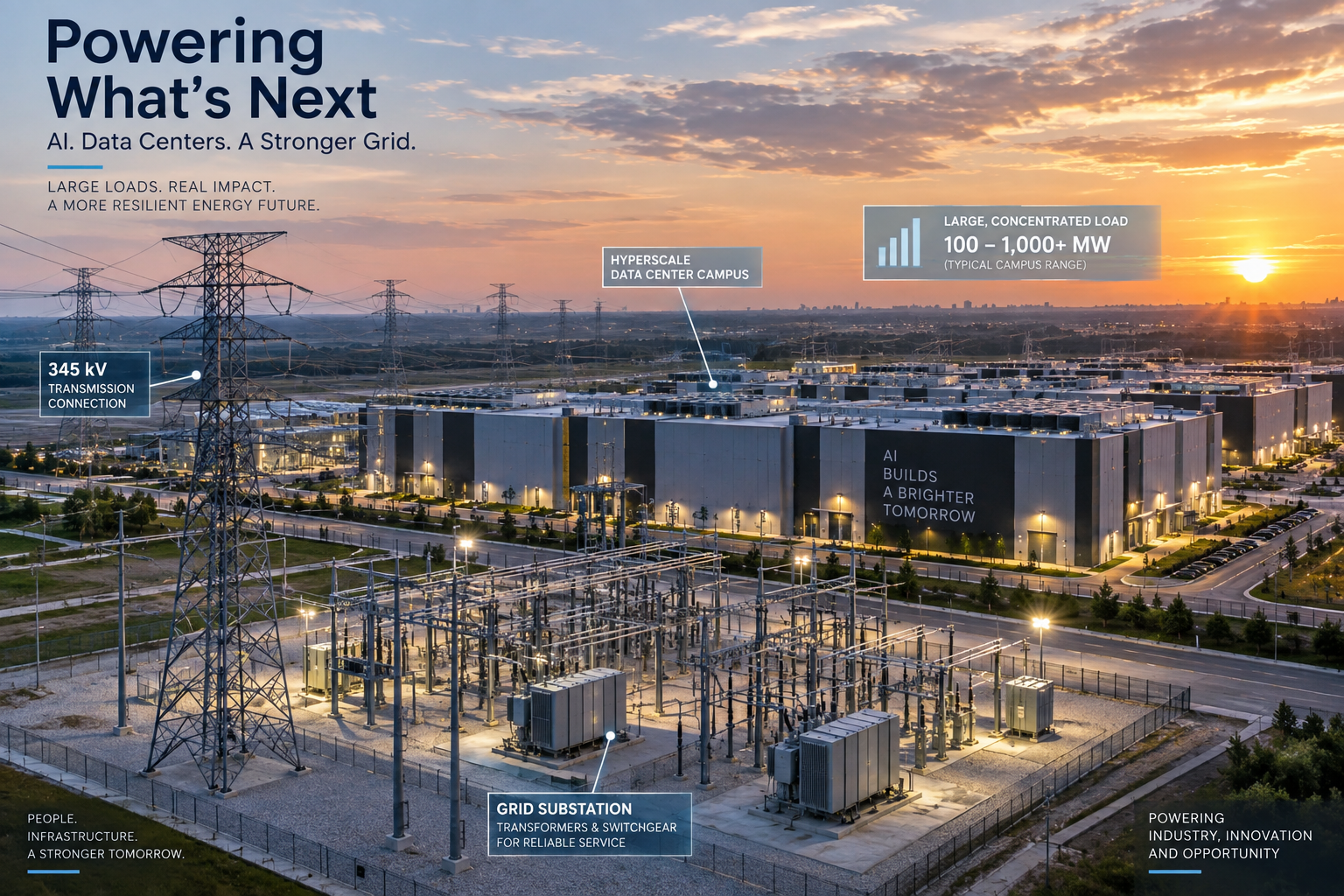
Why AI Data Centers Are Reshaping Grid Planning
Explores how rapid growth in AI and hyperscale data centers is creating large concentrated loads while accelerating demand for power-electronic equipment, grid upgrades, and new approaches to system planning.
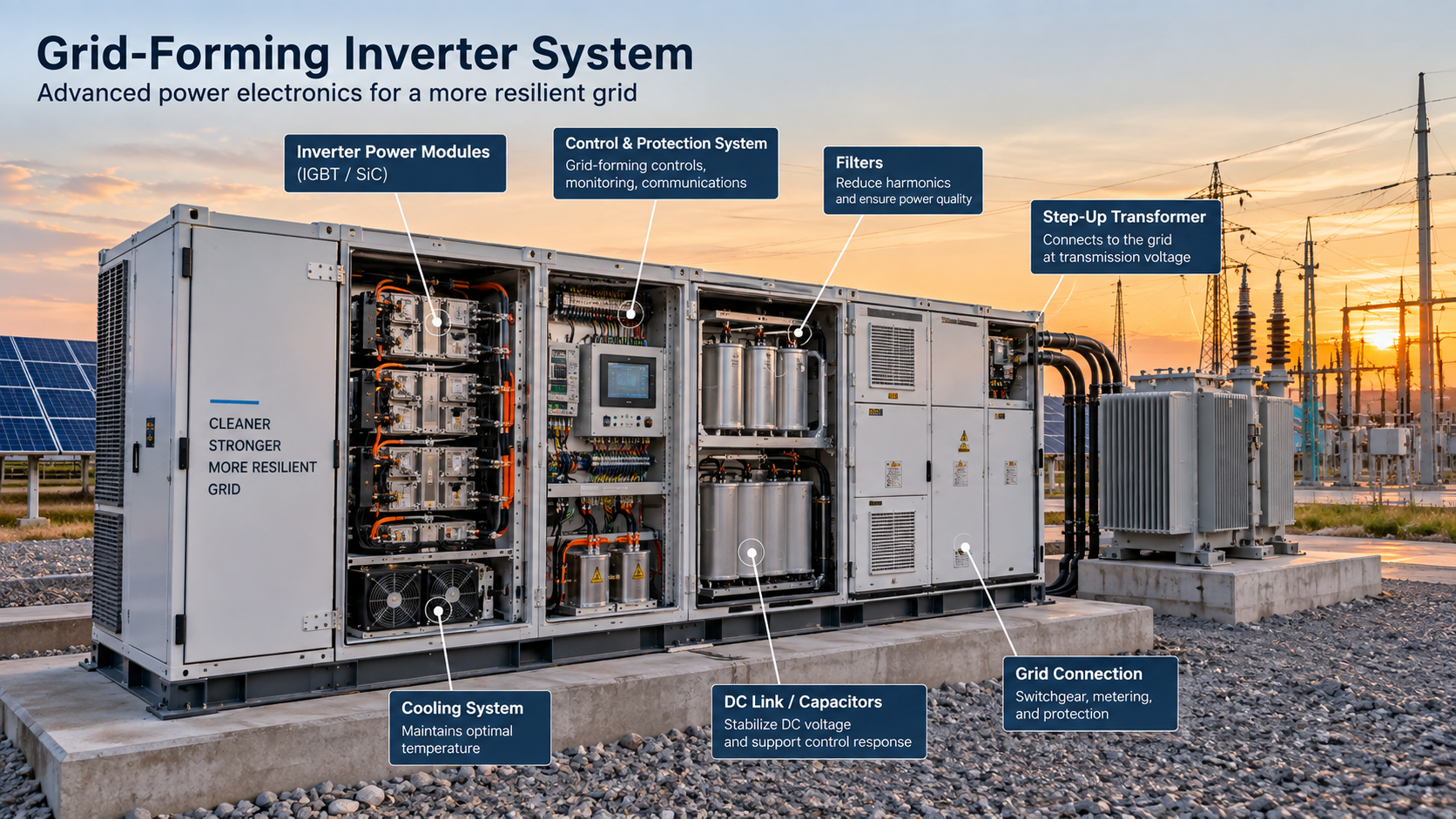
Grid-Forming Inverters: Rebuilding the Functions Once Provided by Synchronous Machines
Examines how grid-forming inverter controls can establish voltage and frequency references, support weak grids, and provide capabilities traditionally associated with synchronous generation.