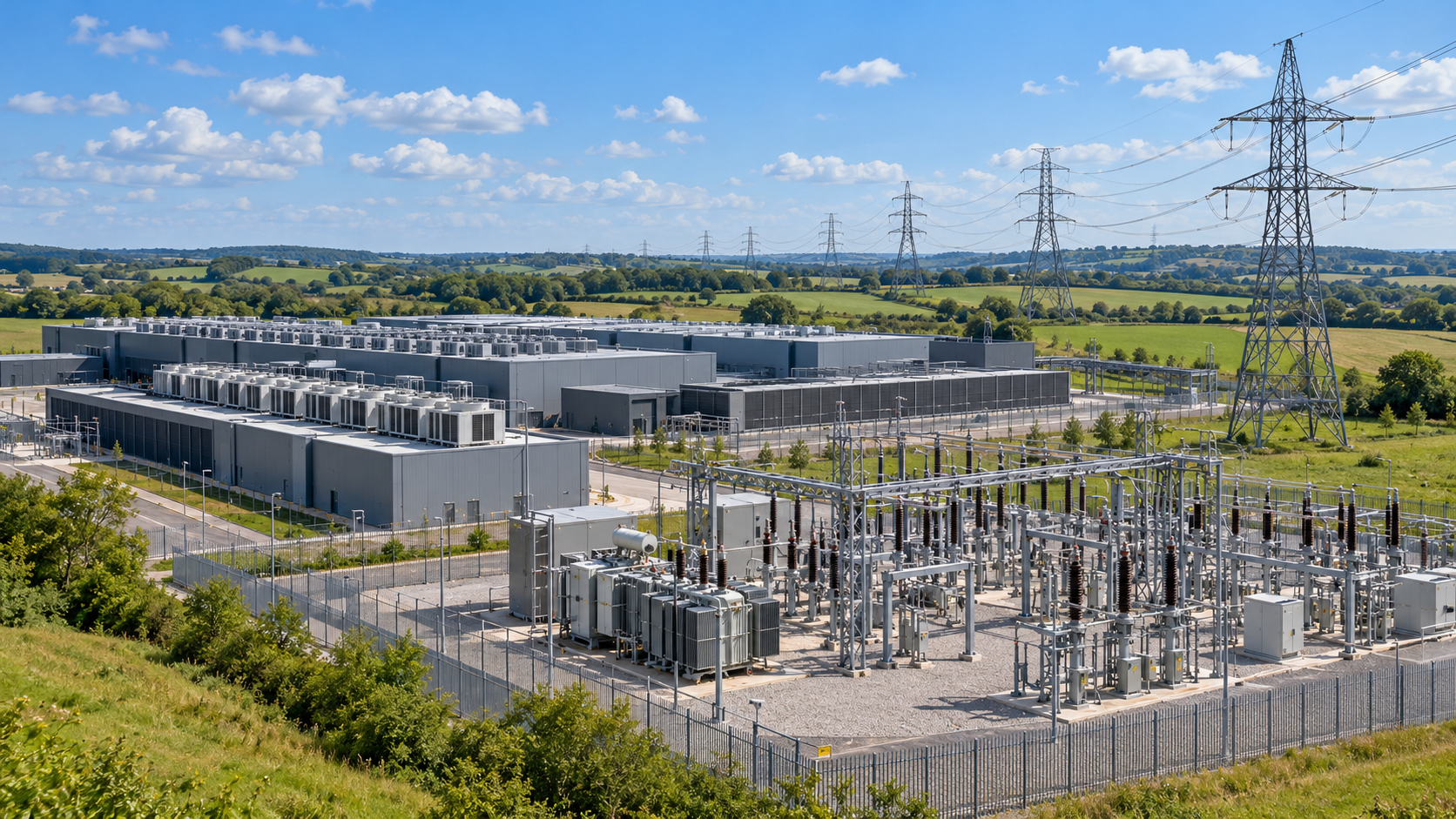
Editorial illustration of a data-center campus and electrical infrastructure; not an identified fuel-cell project.
An October 23 Reuters analysis describes growing data-center interest in fuel-cell generation as developers seek electricity supplies alongside lengthy grid-connection schedules.
The interest has an existing evidence base. Rystad Energy’s published research forecasts substantial growth in the market through 2030. Earlier company announcements also describe fuel-cell procurement arrangements for data-center infrastructure. These are forecasts and commercial arrangements, not a count of commissioned generating capacity.
The electrical system still has to work
Fuel cells produce electricity through electrochemical processes. Depending on the technology and installation, they may provide continuous on-site output, but they still require fuel supply, maintenance and supporting electrical infrastructure.
For engineers, the central questions include how the source connects to the facility’s distribution system, how faults are cleared, and how load transfers between supplies. An installation operating in parallel with the utility has different coordination requirements from one operating independently.
On-site generation does not remove the need to demonstrate reliable operation. Controls, protection, islanding arrangements and the availability of fuel and equipment must be assessed for the actual design.
What comes next
Evidence of delivered equipment and commissioned facilities will be more informative than headline procurement totals alone. The significance is a possible change in how large computing loads secure supply; it is not proof that fuel cells can bypass every infrastructure constraint.