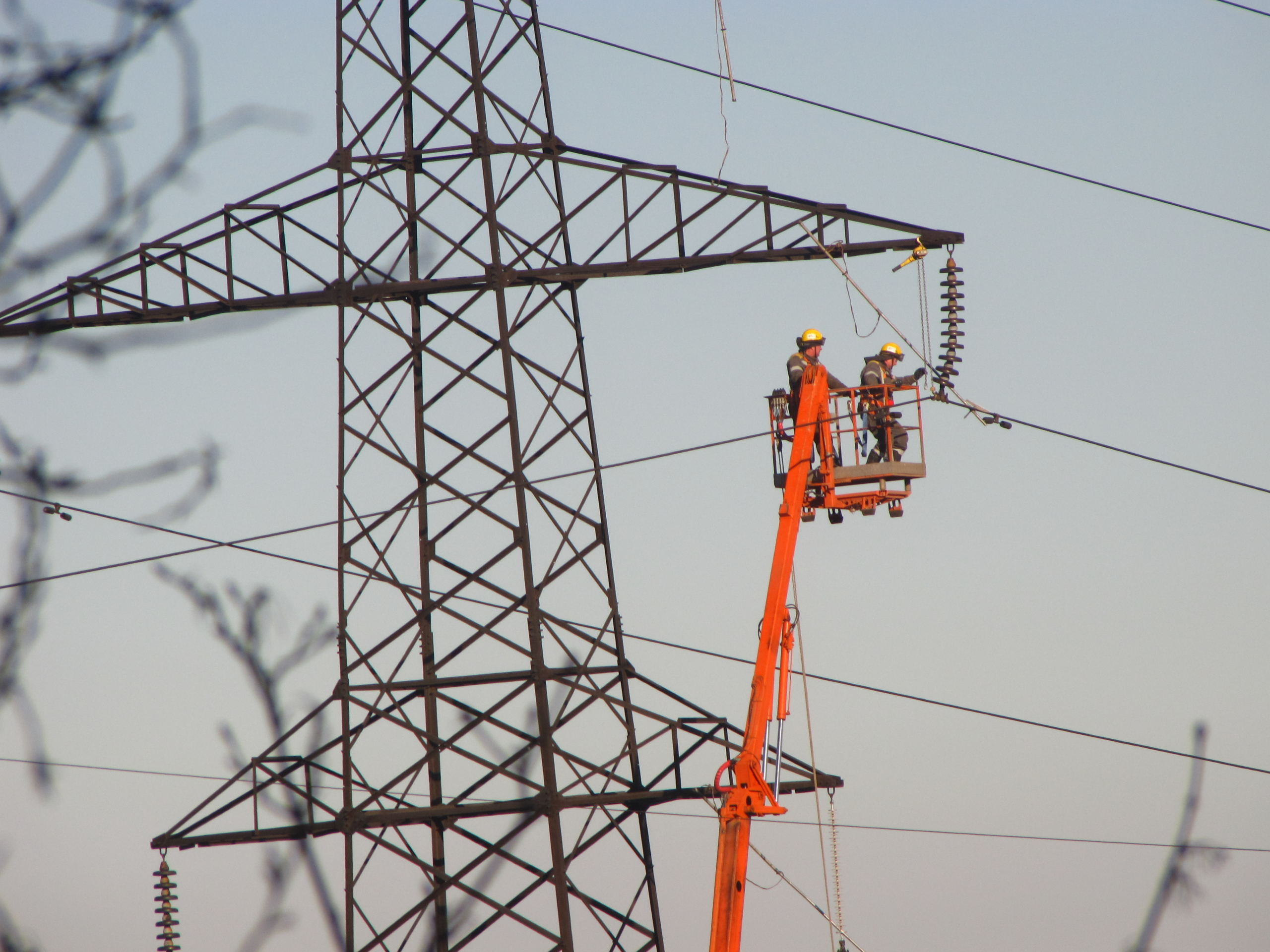
Work on a Ukrainian electricity pylon, photographed in 2016. Photograph: Novoklimov / Wikimedia Commons, CC BY 4.0. Context photograph; not the announced project or a record of the October 2026 event. WordPress-scaled for web; original license retained.

Ukraine’s transmission operator Ukrenergo announced consumption restrictions for October 25 as the electricity system manages the consequences of damage to energy infrastructure.
The operator’s October 24 announcement, available in its official public channel, set industrial capacity-restriction schedules between 6 a.m. and 11:59 p.m. local time. Hourly interruption schedules for all consumer categories in affected regions were listed between 7 a.m. and 11:59 p.m.
Those windows describe the period in which schedules may operate. They do not mean that every customer would be without electricity continuously throughout the window, or that all regions face identical restrictions.
Ukrenergo attributed the restrictions to the consequences of Russian attacks on energy facilities. It warned that system conditions could change and directed customers to their regional distribution operators for current schedules.
A constrained operating system
Engineering analysis: consumption restrictions can help operators manage unavailable generation or network capacity. The relevant constraint must be assessed against the actual operating system; this notice does not quantify the contribution of individual damaged plants or transmission assets.
The update concerns scheduled electricity restrictions and physical infrastructure damage. It provides no evidence of a newly confirmed cyberattack. The published day-ahead schedule should be read alongside subsequent regional instructions rather than treated as a live guarantee.