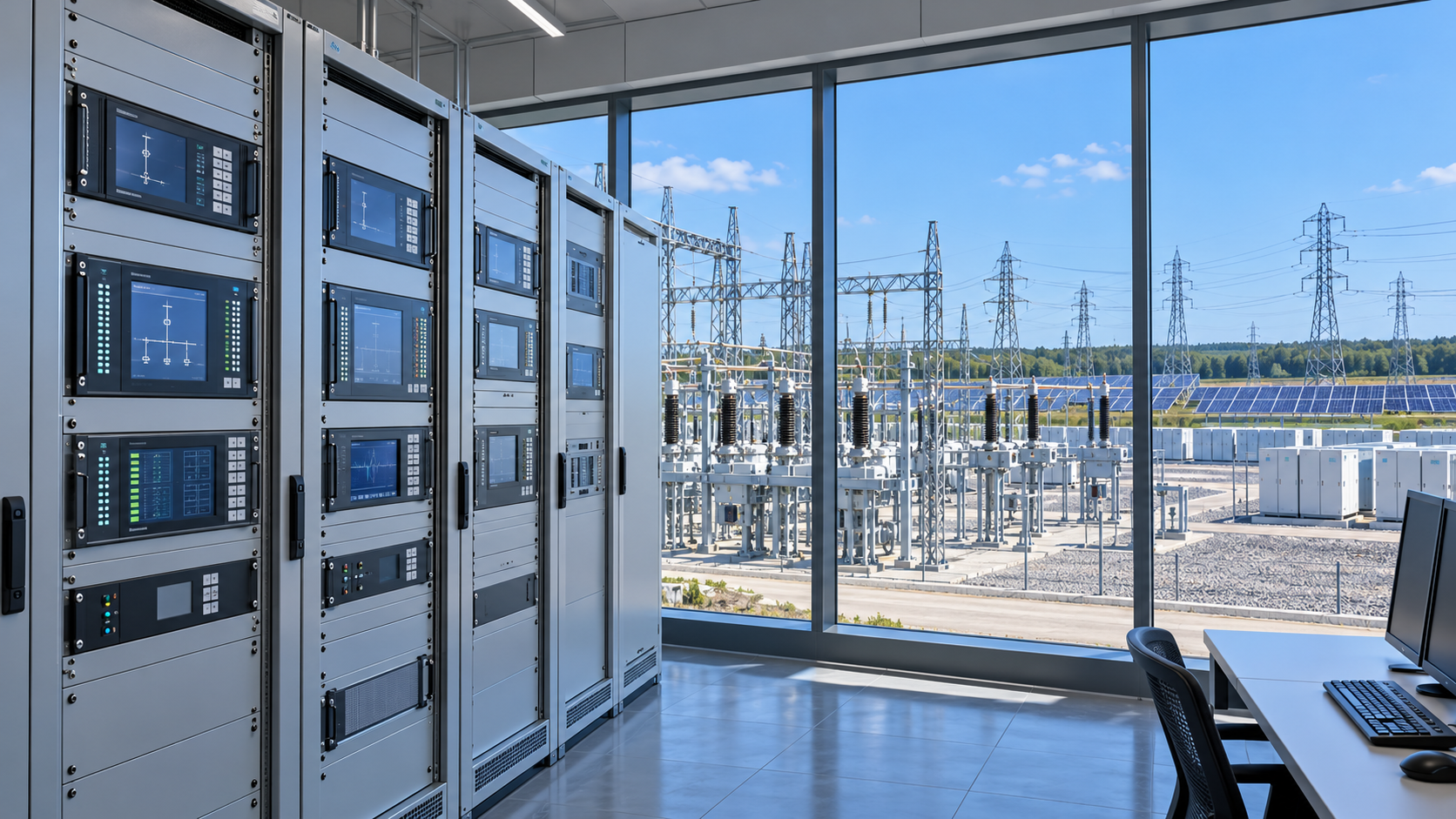
Conceptual editorial illustration of electricity infrastructure; not a photograph of the reported location or event.
A reported electrical disturbance during maintenance testing led to automatic protective disconnection of Koeberg Unit 1, raising questions about relay settings and protection coordination.
South Africa’s Koeberg Nuclear Power Station Unit 1 has returned to service following an electrical disturbance that triggered automatic protective disconnection.
In an October 22 report by South African Government News, Eskom said the disturbance occurred on October 16 during testing associated with Unit 2’s planned maintenance outage.
The disturbance exceeded predefined tolerance limits of a protection system associated with Unit 1, opening the unit’s 400-kV and 24-kV breakers automatically.
Eskom said an investigation identified a conservative protection-relay setting as a contributing factor. The utility said protection operated as designed, nuclear safety was unaffected, and Unit 1 was stable and synchronized to the grid. Unit 2 remained in planned maintenance.
Why it matters for the grid
A relay can respond correctly to its configured settings while an event still raises questions about coordination, selectivity and operating margins. Protective action and a malfunction are different findings.
What comes next
The reported outcome supports closer examination of setting philosophy and the disturbance sequence. The public account does not supply relay records or sufficient detail to independently reconstruct the event. October 22 is the report date, not the date of a new shutdown.
Related analysis: Protection Challenges in Inverter-Dominated Power Systems