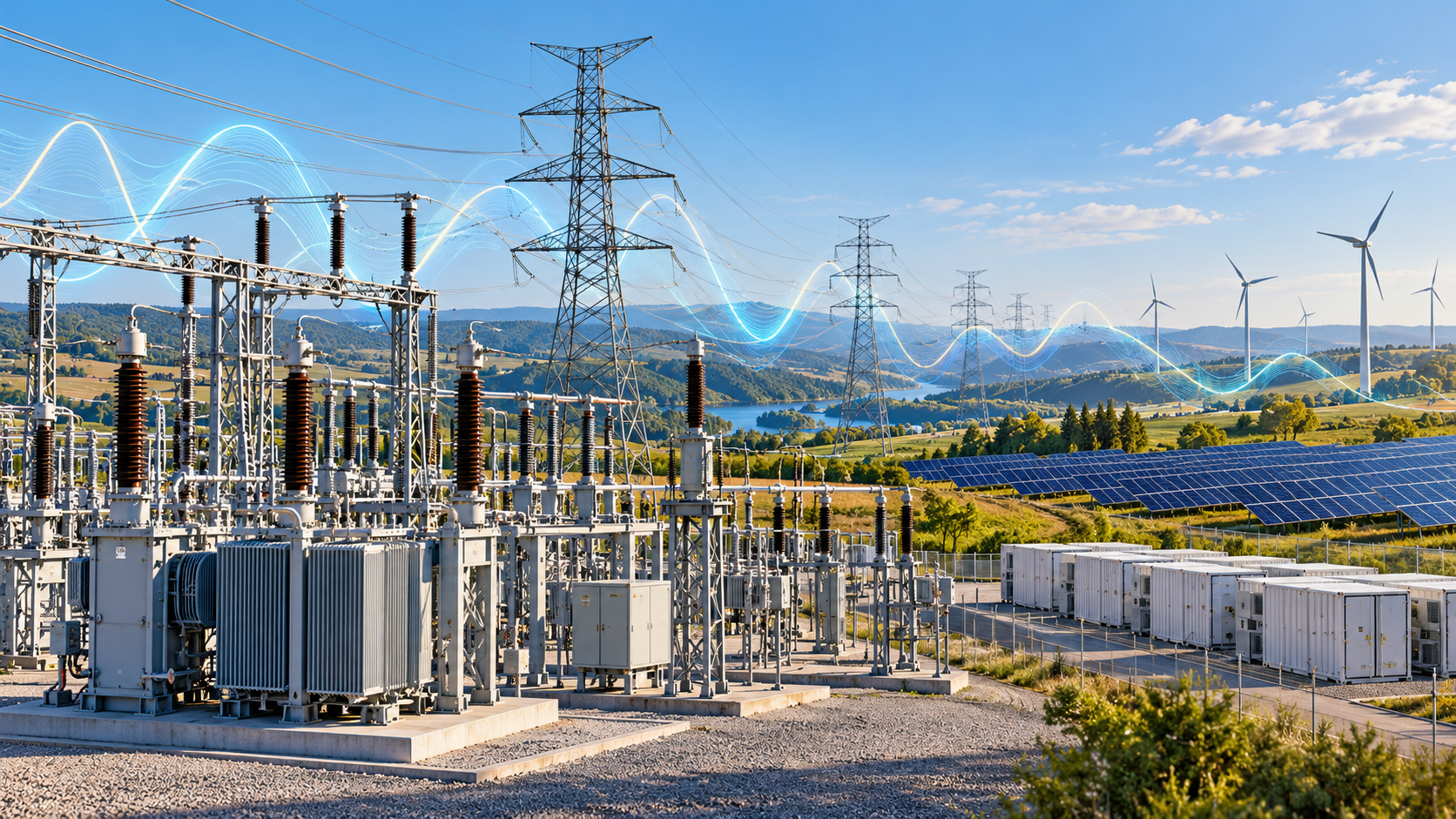
Editorial illustration of generation, storage and transmission; not a photograph of a specific Australian project. Waveforms are conceptual.
Australia’s latest connection figures show a growing battery and renewable pipeline. The test is bringing viable projects into operation.
The Australian Energy Market Operator reported on October 21 that 80.9 gigawatts of generation and storage capacity was progressing through the National Electricity Market’s connection process, up 43% over the year.
Its September 2026 Connections Scorecard puts standalone grid-scale batteries at 55% of pipeline capacity, with solar-and-battery hybrids accounting for another 19%. These are shares of capacity in the connection process, rather than shares of electricity supplied.
A pipeline is not operating capacity
AEMO received 7.5 GW of new connection applications during the September quarter, including 5.8 GW of battery projects. About 88% of pipeline capacity remained in the application and proponent implementation stages.
Implementation can include finalising contracts and constructing plant. It does not establish that a project is commissioned. The scorecard separately records registration and testing toward full output.
Why commissioning matters
The engineering significance is the distance between proposed megawatts and verified performance. AEMO’s connection-process guide describes review of performance standards, constructed-plant models and staged onsite testing. Those steps help establish that connected equipment performs as agreed.
The figures do not establish how much of today’s pipeline will ultimately operate or when it will be available. Future scorecards will show whether projects advance into registration and commissioning, while AEMO says design changes and commercial arrangements can affect progress.
Read AEMO’s announcement and the September Connections Scorecard. For context, explore The Power Electronics Supercycle.